What Are Braces? How They Straighten Teeth in Rome, GA
Braces are fixed appliances that straighten teeth with brackets, an archwire, and elastics. Most Rome braces plans at Ryan Cox Orthodontics run 12 to 30 months, while gentle, steady pressure guides teeth into better positions. Dr. Ryan Cox designs each plan to correct crowding, gaps, and bite issues, then protects your new smile with a retainer.
That's the short version. Here's what's actually happening inside your mouth, piece by piece.

How Do Braces Move Teeth?
Braces move teeth with light, continuous pressure. Brackets and an archwire push each tooth in a planned direction, and the periodontal ligament around the root responds by signaling bone to dissolve ahead of the tooth and rebuild behind it. That remodeling takes weeks, which is why Dr. Cox spaces adjustment visits about four to eight weeks apart rather than rushing the process. After teeth arrive in their new spots, a retainer holds everything still while the surrounding bone and gum fibers settle in for good.
The Parts of Your Braces
Every set of braces uses five core parts: brackets bonded to each tooth, an archwire that connects them and does the actual work of moving teeth, ligatures that hold the wire in place, metal bands around back molars for anchorage, and elastics that correct your bite. Dr. Cox adds auxiliaries like expanders or springs when your case calls for them, but you won't need every component, your setup depends on what your teeth and bite need.
Types of Braces at Ryan Cox Orthodontics
Rome braces come in several forms, and Dr. Ryan Cox offers all of them at our Rome office, the right choice comes down to your case complexity, your schedule, and how visible you want treatment to be.
Metal Braces
Modern metal braces are smaller, lighter, and more comfortable than the ones you remember from the 90s. Stainless steel brackets handle serious rotations, deep bites, and big corrections with precision, the workhorse of orthodontics for good reason.
Clear Braces
Clear braces use ceramic brackets that blend with your natural tooth color. They work the same way metal braces do, with the same bracket-and-wire mechanics, but they're much harder to notice in photos and across a conference table. Adults and image-conscious teens gravitate toward them.
Lingual Braces
Lingual braces go on the tongue side of your teeth instead of the front. Nobody sees them. For attorneys, performers, brides, and anyone in front of a camera, that matters. Lingual treatment takes some adjustment for your tongue in the first couple of weeks, and it requires the kind of technical skill you want from a board certified orthodontist.
Braces Comparison: Metal, Clear, Lingual, and Clear Aligners
| Option | Visibility | Typical Treatment Time | Best For |
|---|---|---|---|
| Metal braces | Most noticeable | 12-30 months | Complex crowding, big bite corrections, kids and teens |
| Clear braces | Blends with teeth | 12-30 months | Adults and teens who want discretion with full braces control |
| Lingual braces | Hidden behind teeth | 18-30 months | Professionals, performers, anyone who can't show hardware |
| Clear aligners | Nearly invisible | 12-24 months | Mild to moderate cases with strong wear compliance |
What Braces Can Correct
Braces do more than line up front teeth for photos, they rebuild how your teeth meet and function: crowding, gaps and spacing, overbite, underbite, crossbite, open bite, rotated or tipped teeth, impacted teeth, and midline problems where your upper and lower front teeth don't line up. From age seven to 78, Dr. Cox evaluates all of it together, teeth, bite, jaw growth, airway, and facial balance, which is the difference between straight-looking teeth and a healthy, stable smile.
Benefits of Braces: Health, Function, and Confidence
Braces deliver the most predictable tooth control in orthodontics. Because brackets stay bonded around the clock, they correct severe crowding, deep bites, and stubborn rotations with precision, and don't depend on you remembering to wear anything. Straight teeth are also easier to keep clean, which means less decay, less gum inflammation, and more even wear on your enamel. A corrected bite improves chewing and eases strain on your jaw joints, and well-positioned teeth make any future dental work, crowns, bridges, or implants, fit better down the line.
Then there's the part families talk about most: a teen who used to smile with a closed mouth starts grinning in yearbook photos, an adult who covered their mouth in meetings stops thinking about it. Dr. Cox often recommends braces over aligners for severely rotated teeth, impacted teeth being guided into the arch, large bite corrections, or younger patients where compliance with removable trays is uncertain, cases where fixed, always-on pressure simply outperforms a removable tray.
The Braces Process Step by Step at Ryan Cox Orthodontics
Rome braces treatment at Ryan Cox Orthodontics typically runs 12 to 30 months across five clear phases: your free consultation with records, your treatment plan review, the bonding visit, adjustment visits every four to eight weeks, and removal with retainer delivery. Most of the process happens quietly in the background while you live your life.
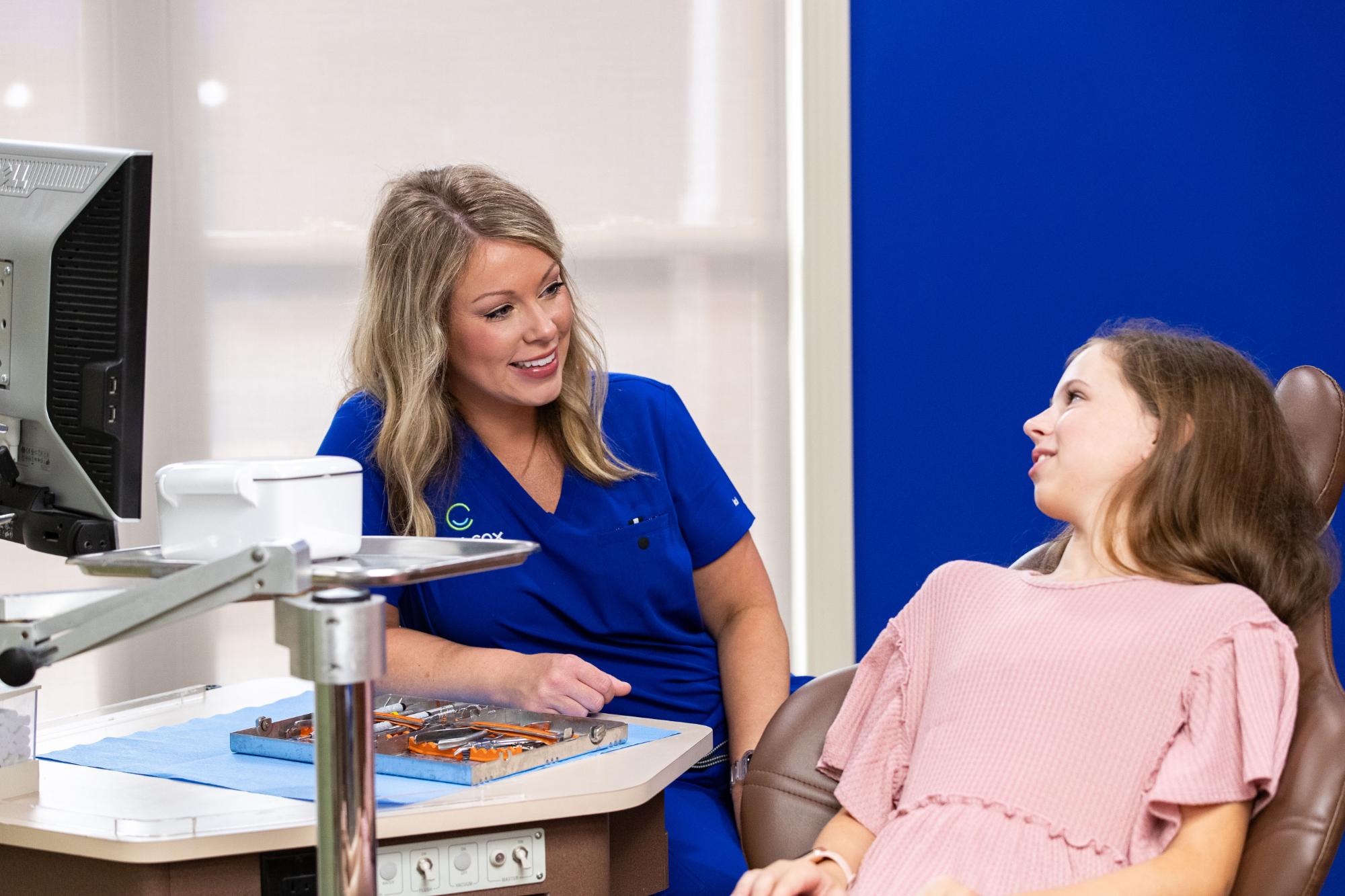
Step 1: Your Free Consultation and Records
Your first visit costs nothing and commits you to nothing. Dr. Cox examines your teeth, bite, and jaw function, then our team captures digital scans, clinical photos, and X-rays. Digital scanning replaces the old goopy impression trays, so it's quick and comfortable, and you'll talk through what bothers you most so that conversation shapes the plan. Se habla español, so Spanish-speaking families can ask every question in the language they're most comfortable with.
Step 2: Your Treatment Plan Review
Dr. Cox walks you through what he found, what he recommends, and why. You'll see your own scans and photos, hear the realistic timeline for your case, and understand what your day-to-day responsibilities will be before you decide anything.
Step 3: The Bonding Visit
Placement day usually takes 60 to 90 minutes with no shots or drilling involved. We polish and dry your teeth, Dr. Cox positions each bracket precisely and cures the adhesive with a light, then the archwire threads through and gets secured. Bands or an expander go on at this visit if your plan calls for them, and our team walks you through brushing, flossing, and food rules before you leave.
Your first week: expect general tenderness for three to five days as your teeth start moving, plus some cheek and lip sensitivity while soft tissue toughens up. Soft foods and orthodontic wax help a lot, and by day seven most people forget the braces are there.
Step 4: Adjustment Visits Every Four to Eight Weeks
These visits run 15 to 30 minutes. Dr. Cox checks your progress, adjusts the archwire to keep teeth moving, replaces elastic ties, and adds elastics or springs when it's time for the next stage. Keeping these visits matters more than people expect, missed visits are one of the most common reasons treatment runs longer than planned.
Step 5: Removal, Retainers, and Retention
Removal day is quick: brackets pop off, adhesive gets polished away, and you see your new smile without hardware for the first time. We scan for retainers the same day or shortly after, full-time wear at first, then a shift to nighttime wear long term, since teeth drift for life without one.
Daily Life With Braces
Brushing and flossing: brush after every meal, angling the bristles above and below each bracket, and use a floss threader or water flosser to get under the wire.
Foods to skip: hard items like nuts, ice, and popcorn kernels, sticky items like caramel and gum, and anything you'd normally bite with your front teeth, cut those up instead.
Between visits: a poking wire can be tucked with the eraser end of a pencil. A loose bracket usually isn't urgent, but call our Rome office at 706-234-0877 so we can advise you and schedule a repair.
Are You a Good Candidate for Braces?
Most children age 7 and up, teens, and adults with healthy teeth and gums are good candidates for Rome braces. Age isn't the deciding factor, oral health is. Cavities and gum inflammation need treatment first, and existing crowns or bridges get evaluated before bonding. Dr. Ryan Cox confirms candidacy at your free consultation using digital scans, photos, and X-rays.
Signs You or Your Child May Need Braces
Worth an exam if you notice: teeth that overlap or crowd together, noticeable gaps between teeth, front teeth that stick out or don't touch when biting, teeth that don't meet evenly, jaw clicking or soreness, chronic mouth breathing, cheek biting, trouble chewing certain foods, baby teeth lost very early or late, or thumb sucking past the toddler years. None of these guarantee you need braces, but all of them are worth a look.
Age-by-Age Guidance
The American Association of Orthodontists and Dr. Cox encourage kids to have their teeth checked by age seven, since enough permanent teeth are in by then to reveal crossbites, crowding, and jaw growth patterns, though early evaluation doesn't always mean early treatment. Ages 10 to 14 are the classic window since jaws are still growing, and Dr. Cox can guide that growth more easily now than later. Teens and adults both do well with treatment too, adult plans just account for gum health, restored teeth, and any jaw joint history, and can take a bit longer than a growing teen's.
Health Prerequisites Before Bonding
Braces go on healthy teeth. Before treatment starts, we'll want cavities treated, gum inflammation under control, a recent cleaning within the last six months, and any existing crowns, veneers, or bridges assessed, since they bond differently than natural enamel. Ryan Cox Orthodontics works closely with referring dental offices across the area to sequence all of this smoothly.
Your Next Step
Book a free consultation at our Rome office and get a real answer about your candidacy. There's no charge and no pressure.
Braces FAQs: Timeline, Comfort, and Care
How long do braces take?
Most braces treatment runs 12 to 30 months. Mild crowding or spacing may finish closer to a year, while significant bite corrections, impacted teeth, or extraction cases take longer. Your timeline also depends on keeping your visits every four to eight weeks and wearing your elastics as prescribed. Dr. Cox gives you a realistic estimate before treatment starts.
Do braces hurt?
Getting braces on doesn't hurt, and there are no needles involved. Expect general soreness for three to five days after placement and mild tenderness for a day or two after adjustments. Soft foods, cold water, orthodontic wax, and over-the-counter relief handle it well. Most people are back to normal eating within a week.
Can adults get braces?
Yes. Adults make up a meaningful share of orthodontic patients today, and Dr. Cox treats adults regularly at our Rome office. Bone continues to remodel throughout life, so teeth still move. If visibility concerns you, clear braces and lingual braces both offer discreet ways to straighten your teeth without changing how you show up at work.
Do I need a referral from my dentist?
No referral is required. You can schedule a free consult at Ryan Cox Orthodontics directly, and many families do. That said, we work closely with dental offices throughout the Rome area and coordinate with your dentist on cleanings, cavities, and any restorative care during treatment.
What happens if a bracket breaks or a wire pokes?
Call our Rome office at 706-234-0877 and we'll get you scheduled. A loose bracket usually isn't urgent, but it shouldn't wait weeks. For a poking wire, tuck it down with the eraser end of a pencil and cover it with orthodontic wax until your visit. Save the wax we send home with you.
Will I need a retainer after braces?
Yes, and it's not optional if you want to keep your beautiful smile. Teeth naturally drift throughout life. Dr. Cox typically starts you with full-time wear, then transitions you to nighttime wear long term. Retention checks confirm everything is holding where it should.

Book Your Free Braces Consultation in Rome, GA
Let's find out what's possible for your smile. Your free consultation includes a full exam with Dr. Ryan Cox, digital scans and photos, and a clear treatment recommendation. No pressure, no obligation, no charge.
What to bring: your insurance card if you have orthodontic coverage, a list of your questions and goals, any recent X-rays from your dentist, and your child's dental history for pediatric visits.
Reach our Rome office:
- Call or text: 706-234-0877
- Request your visit online: https://www.smilewithpride.com/free-consult/
- Visit us: 23 John Maddox Dr. NW, Rome, GA 30165
Our Rome, GA office welcomes patients of all ages, from first-grade evaluations to adults finally doing something they've wanted for years. Spanish-speaking families are always welcome, and personal, professional orthodontics is what we do here.